'Somewhere right now, two strangers’ cursors are touching'

This is the most perfect essay about the 一期一会 (Ichigo ichi-e) of the internet. Spencer Chang finds the perfect words to talk about the beauty of the ‘one time, one meeting’-ness of the internet.

“Somewhere right now, two strangers’ cursors are touching. Someone is breaking ground on a new piece of the internet for their personal website. Hundreds more are visiting tiny spaces and games to share their feelings with their online family.

The Internet was never promised to be open, free, or modifiable. Born in the U.S. military and courted by several private companies, it could have easily been seized by a single entity. Instead, many brave people fought to keep it open to everyone, collectively stewarded by many, and owned by no one.

We can shape these internets together, piece by piece. We can make our own public parks, cafes, bodegas, waterfalls, and mountains. We can take care of them, not as users, but as stewards maintaining a home for generations to come.

These internets won’t be an escape from the real world. We’ll go offline to touch grass, hang out with friends, and then come back online to find friends and strangers a world away, meeting for a brief moment. One time, one meeting. 一期一会.”

The Internet has no benches, Spencer Chang

So grateful to Ash Mann for sharing this with me.

Some cool websites

Soft sell or hard sell?

Auto-generated description: A minimalistic website homepage features the text So, yeah, I’m a freelance copywriter. What of it? against a black background, with navigational elements labeled Joe Coleman, Less Hard Sell, and More Hard Sell. A great small biz site with a soft sell to hard sell slider https://getcoleman.com/
How to build an archive

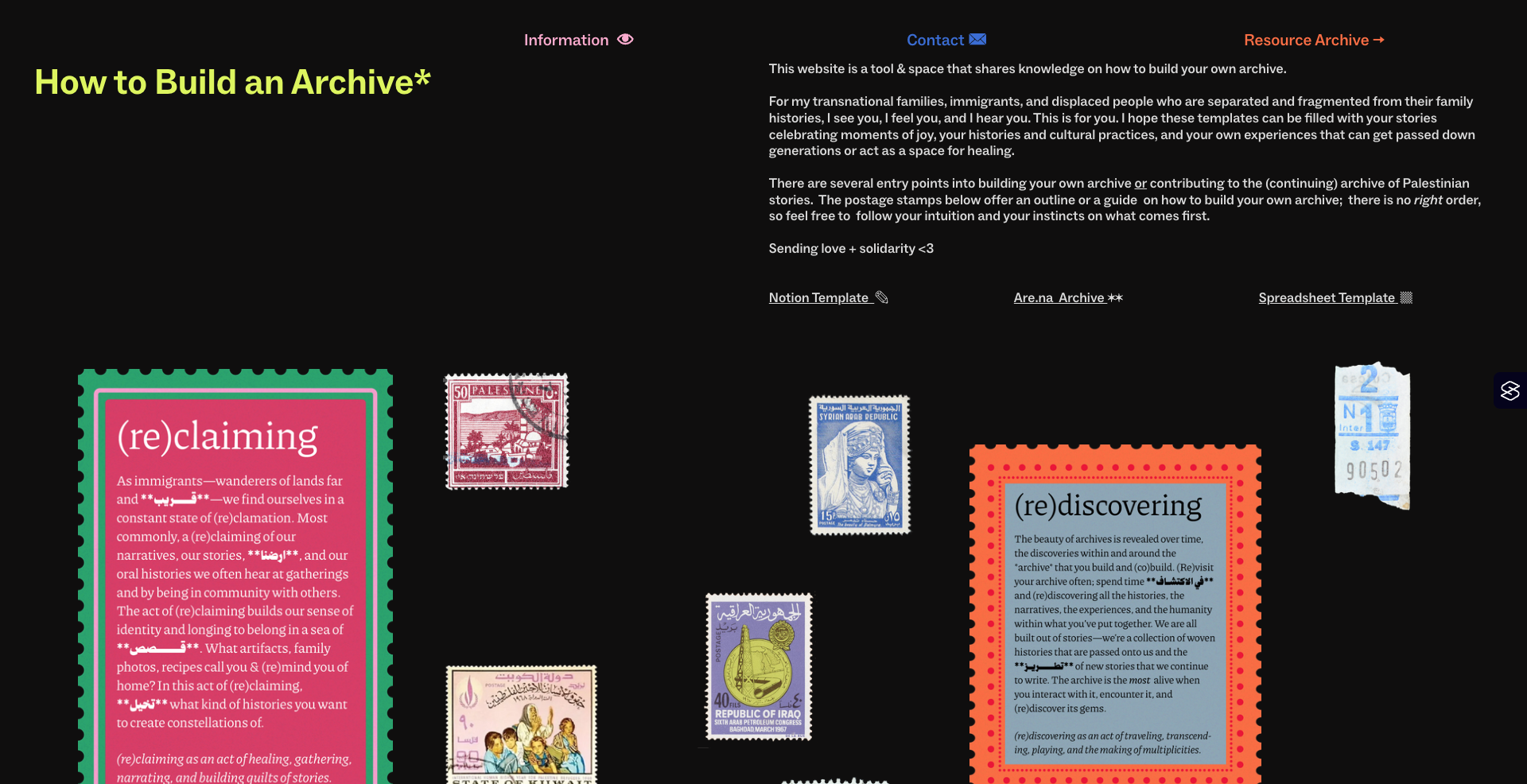
A website with information on how to build your own archive, with a beautiful design featuring old stamps https://howtobuildanarchive.com/
Is a human cheaper?

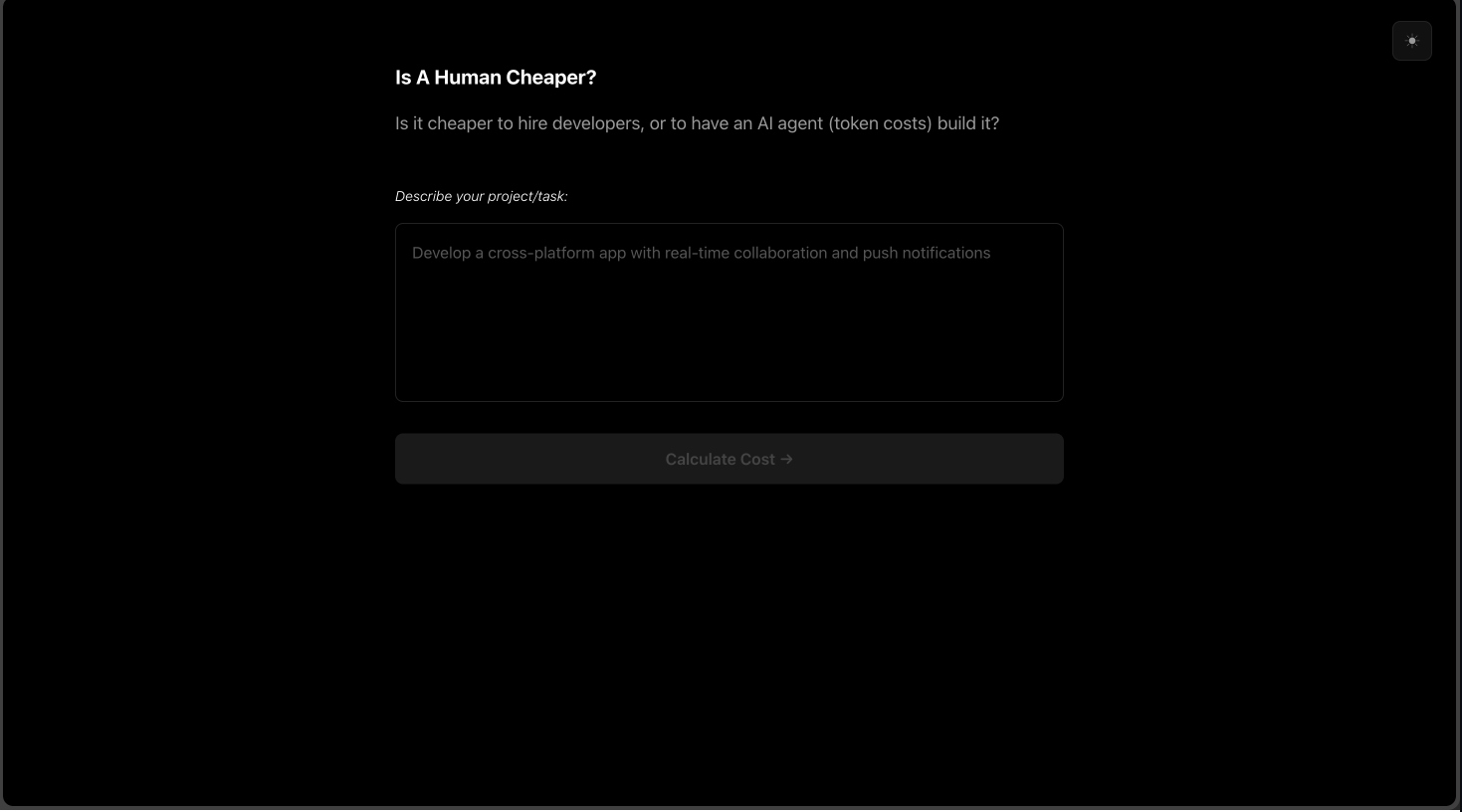
A calculator to see: Is it cheaper to hire developers, or to have an AI agent (token costs) build it? https://isahumancheaper.damjanski.com/
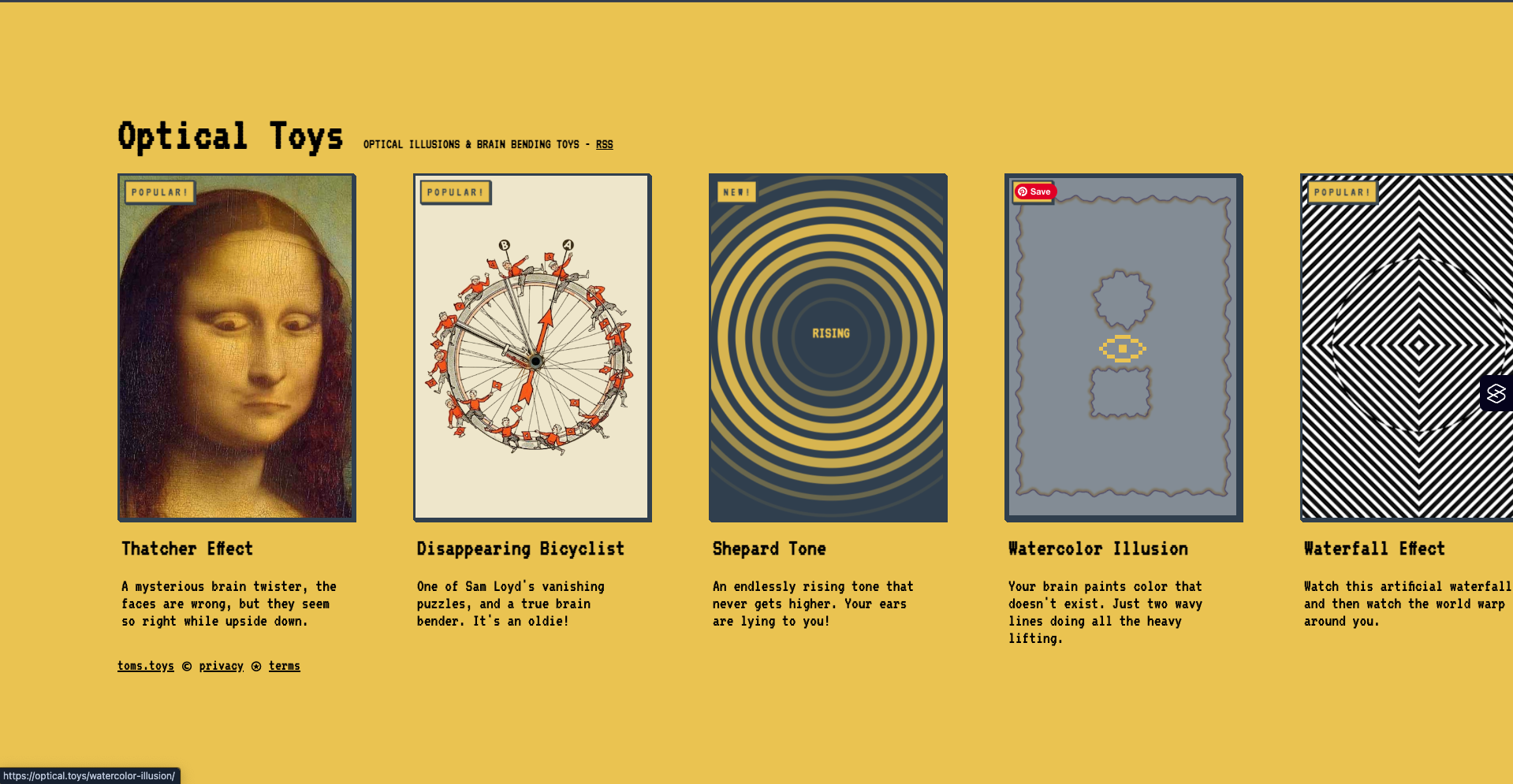
Optical toys

Optical illusions to melt your brain https://optical.toys/

Mind mental health expert on Google’s AI Overviews

“Over three decades, Google designed and delivered a search engine where credible and accessible health content could rise to the top of the results.

“Searching online for information wasn’t perfect, but it usually worked well. Users had a good chance of clicking through to a credible health website that answered their query.

“AI Overviews replaced that richness with a clinical-sounding summary that gives an illusion of definitiveness.

“It’s a very seductive swap, but not a responsible one. And this often ends the information-seeking journey prematurely. The user has a half answer, at best.

“I set myself and my team of mental health information experts at Mind a task: 20 minutes searching using queries we know people with mental health problems tend to use. None of us needed 20.

“Within two minutes, Google had served AI Overviews that assured me starvation was healthy. It told a colleague mental health problems are caused by chemical imbalances in the brain. Another was told that her imagined stalker was real, and a fourth that 60% of benefit claims for mental health conditions are malingering. It should go without saying that none of the above are true.

‘Very dangerous’: a Mind mental health expert on Google’s AI Overviews

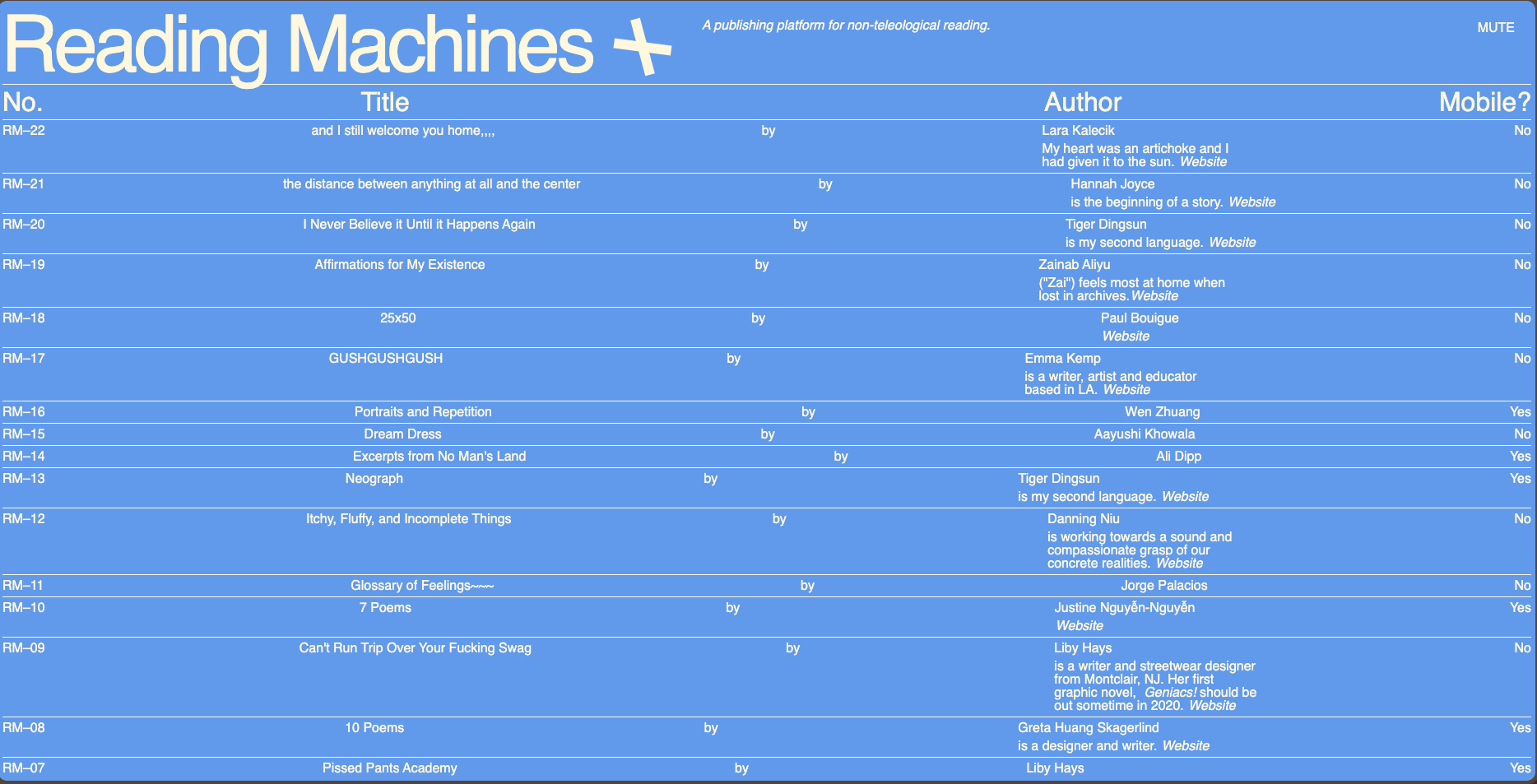
Reading Machines: 'A publishing platform for non-teleological reading.'

A very cool project with a collection of personal essays in unusual formats and structures.

It’s described as:

‘A publishing platform to reimagine established relationships between reader, text, and author, and to fully utilize the affordances the web offers in the presentation of text. Contributors are asked to submit texts that might lend themselves well to non-linear readings, which are then re-interpreted into their own websites.Designed, edited, and developed by Tiger Dingsun.’

Reading Machines

A blue digital catalog lists various literary works with columns for number, title, author, and mobile availability.

'89% of unbranded prompts (which do not mention a specific brand) are fulfilled by third-party sources'

Stats from Bain & Co on how AI is affecting search behaviours:

  • 44% of online buyers surveyed by Bain & Company mostly start their journey in an LLM or split their search between AI tools and traditional search engines

  • Roughly twofold faster adoption among Gen Z and millennials compared with baby boomers and the Silent Generation Half of online shoppers in our survey trust generative AI for initial research and product comparisons

  • An analysis of proprietary ScrunchAI search data spanning about 500 million citations showed that 89% of unbranded prompts (which do not mention a specific brand) are fulfilled by third-party sources

  • The dispersion by topic is 76% to 99%, far more than the 89% to 90% dispersion by AI platform

  • Your Next Customer Will Find You Using AI. Now What?

Data centres, sustainability and Microsoft removing the 'AI button'

Interesting data centre round-up in the latest edition of the always-interesting Curiously Green:

“The sheer volume of stories about data centres and digital infrastructure, both positive and negative, reflect the financial pressures and increased scrutiny the industry is under. In the UK, the fanfare around data centre investment has died down somewhat. In its place are questions about the cost, time frame and environmental implications of these investments, assuming they come to fruition. Earlier this month OpenAI announced that they were shelving £31 billion of planned spending on a UK “Stargate” data center. Energy costs and regulations were cited as the main reason for rolling back on the deal.

In the UK and EU regulators are giving increased attention to planned digital infrastructure investment. Frameworks like the Energy Efficiency Directive (EED) have major implications for any industry relying on energy intensive infrastructure, such as hyperscale data centers. Chris Adams of the Green Web Foundation wrote a useful primer on its implications for European Data Centers. It’s something that would hopefully stop Elon Musk’s gas turbine powered data center in Memphis from being allowed in Europe.

Legislative pressure here seems to be having a bifurcating effect on how transparent big tech companies are when they talk about their environmental footprints. On the one hand there appears to be a general trend of companies talking less about their carbon footprints. This Fast Company article reminds us that Google’ s sustainability sub-site, barely mentions sustainability at all (if you are a climate communicator and want to see a masterclass in obfuscation and misdirection, give the site a visit).

On the other hand platforms like AWS are talking up their sustainability efforts. Perhaps spurred on by an increasing backlash against new data centres, the article above from Data Centre Magazine addresses issues such as Power Usage Efficiency (PUE), water consumption, renewable power (albeit from matched contracts) and more. I can’t comment on the veracity of their claims but it’s a more transparent approach to that taken on Google’s sustainability landing page – Making AI helpful for everyone, including the planet…”

Also some interesting speculation about why Microsoft is removing the AI button from products:

“The Verge reports that Microsoft has started to remove AI buttons on Windows 11. While the underlying AI tech remains, the Copilot button is being removed from various aspects of the operating system. You could be forgiven for thinking that unnecessary AI usage is costing the company too much. It certainly looks like a step back from the “AI in everything” trends we’ve seen in the last 12 months. There are certainly signs that compute costs are becoming unsustainable across big tech companies (see OpenAI killing Sora and Meta cutting 10% of their staff for other possible examples).”

"If they don’t have the ability in their contract to remove their byline, we’re going to use their name"

“A new piece of Claude-based AI tech is getting rolled out in the newsrooms of the McClatchy Media family of newspapers, and some journalists are being forced to take partial bylines, even when an AI system “wrote” their article.

The tool, called the content scaling agent (CSA) enables editors to create summaries of varying length for any story. I’m imagining the idea of “scaling” a jpeg larger or smaller, but applied to a piece of text. But the CSA can also create, to quote TheWrap, “versions targeted at specific audiences.” TheWrap says page of internal information reviewed by Boiles calls it “a writing partner that handles the mechanical work of content adaptation so journalists can focus on what matters: judgment, voice and storytelling.”

TheWrap links to an example: a piece in Pennsylvania’s Centre Daily Times, credited with the following format: “Reporting by [author redacted]. Produced with AI assistance.” The AI-generated article is two short paragraphs of prose, followed by the heading “Here are the highlights” and then five bullet points. There’s a link in the middle of the article to the full, human-written story, and it’s just shy of 1,200 words long and contains six data-heavy graphics.”

A Newspaper Is Allegedly Slapping People’s Names on AI Stories Without Their Permission

I’ve seen something similar in Claude. When I asked it to analyse text responses in a survey, it produced a report and attributed it to ‘Lauren Sager Weinstein’. I googled and saw that Lauren Sager Weinstein is Chief Data Officer at Transport for London:

A screenshot of a Claude artefact titled Survey Analysis: Detailed Patterns and Themes by Lauren Sager Weinstein, dated January 2026

I tried asking Claude why, but didn’t get anything convincing:

A conversation displays an exchange about a naming error concerning Lauren Sager Weinstein and Lauren Pope, with apologies and an offer to correct the documents.

"We are now flooded with tools that promise automation and end up producing more repair work."

“Systems fail. They falter, decay, break under pressure, or never quite work in the first place. But most of the time, they do not fail all at once. They leak, jam, get stuck. And when that happens, it is not designers or executives who get the call. It is the people who live inside those systems: They are the ones who keep things running.”

“Ironically, AI has made this maintenance work more visible. We are now flooded with tools that promise automation and end up producing more repair work.

Writers are hired to rewrite AI-generated content that lacks clarity or context. Designers are paid to fix broken AI logos or redraw pixel soup into something usable. Engineers are tasked with cleaning up buggy AI-generated apps.

The loop is clear. Automation without understanding leads to more friction, not less. And in every one of these cases, human judgment and care becomes the final defense.

It is way easier to leave after the site has been shipped, because that is when the real work begins. But someone always stays behind to deal with the mess. And it is rarely the people who created it.”

Design As Repair, Ron Bronson